Termite Bait Stations vs. Liquid Barriers: Which System Best Protects Your Memphis Home?
Compare modern termite bait stations and liquid soil treatments to understand how each method defends your Memphis home against destructive subterranean termites.
Subterranean Termite Pressure in the Mid-South
Memphis experiences long, humid summers, abundant seasonal rainfall, and moderate winters. While these conditions make the region green and vibrant, they also create an ideal habitat for subterranean termites. These insects live in large underground colonies and constantly forage through the damp soil in search of cellulose, which makes structural timber, framing, subfloors, and drywall paper prime targets.
Unlike pests that are simply nuisance invaders, subterranean termites feed silently within the structure of a home, often remaining undetected until substantial damage has occurred. Because native soil across the Memphis area tends to support dense subterranean colonies, relying on passive prevention is rarely enough. Homeowners must establish an active defensive perimeter. The two primary methods used in modern professional termite defense are liquid soil barriers and termite baiting systems. Understanding how each system works helps property owners make informed decisions tailored to their home's construction and landscape.
Understanding Liquid Soil Barriers
Liquid termite treatments are one of the most established forms of subterranean termite management. The primary objective of a liquid barrier is to create a continuous treated zone in the soil directly adjacent to a structure's foundation. When termites attempt to cross this zone to reach the wood framing, they encounter the treated soil.
Older chemical treatments relied on repellent barriers designed to keep termites away, but modern pest management relies almost exclusively on non-repellent termiticides. These advanced formulations are undetectable to termites. Foraging workers move through the treated soil naturally, picking up microscopic residues on their bodies without realizing it. Because termites are social insects that groom one another and share food, contaminated workers unwittingly spread the active material throughout their colony, leading to widespread population decline.
How Liquid Barriers Are Applied
Installing a liquid soil barrier requires thorough, methodical labor around the entire perimeter of the home:
- Trenching: Technicians dig shallow trenches in the soil directly against the exterior foundation walls. Liquid termiticide is mixed with the soil as it is replaced, creating a deep, uniform vertical barrier.
- Rodding: In areas with deeper footings or difficult soil compaction, specialized rods inject the material deeper into the subsoil.
- Drilling: Where concrete patios, driveways, porches, or sidewalks abut the foundation, technicians must drill small holes through the masonry every few inches to reach the soil below, inject the liquid, and securely seal the holes with concrete plugs.
Advantages and Considerations of Liquid Barriers
Liquid soil barriers provide an immediate, continuous zone of protection around the home's perimeter. Once applied, a properly installed liquid barrier remains active in the soil for years under normal conditions, offering dependable peace of mind. However, the installation process can be labor-intensive. Concrete drilling is often required, and exterior landscaping, dense shrubbery, or root systems immediately against the foundation may need to be worked around or temporarily disrupted to ensure an unbroken barrier.
Understanding Termite Baiting Systems
Termite baiting systems take an entirely different tactical approach. Rather than attempting to saturate the soil with liquid chemicals, baiting systems exploit the natural biology and relentless foraging behavior of subterranean termites to eliminate entire colonies before they reach the structure.
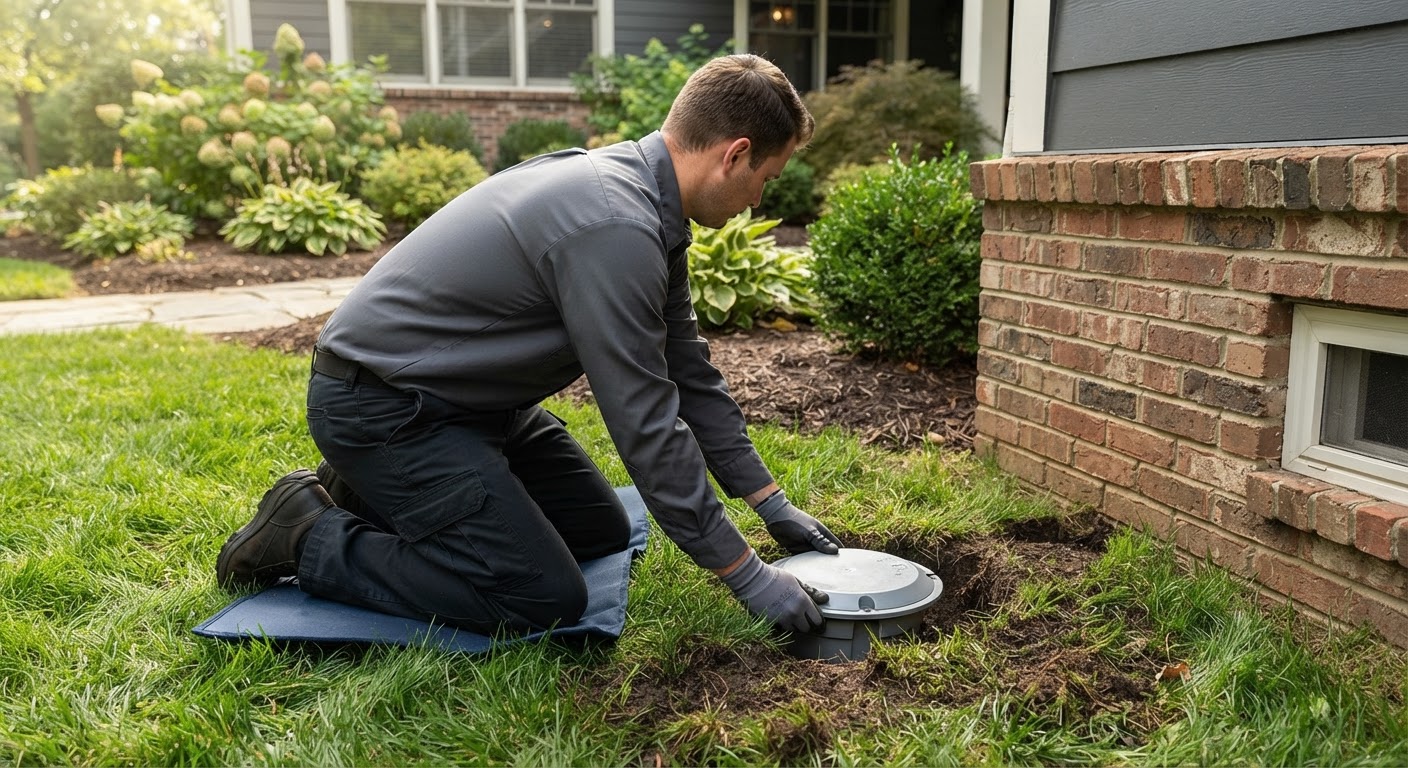
Bait stations are discreet, cylindrical plastic units installed directly into the soil around the exterior perimeter of the property, typically spaced ten to twenty feet apart. Inside the stations are durable, highly palatable cellulose matrices infused with a slow-acting insect growth regulator (IGR). Foraging termites discover the station during their random underground searches, feed on the bait material, and recruit nestmates via pheromone trails to join in feeding.
The Science of Colony Elimination
The insect growth regulators used in baiting systems do not kill termites immediately. If the bait acted too quickly, the termites would perish near the station, and the rest of the colony would learn to avoid the area. Instead, the active ingredient interferes with the termite's ability to synthesize chitin, a critical component of their outer exoskeleton.
When worker termites attempt to molt and grow, the process fails, leading to their death. Because worker termites are responsible for feeding the reproductive queen, soldiers, and nymphs, the collapse of the worker caste starves the entire colony. Over time, the colony collapses completely, eliminating the primary source of subterranean pressure on the property.
Advantages and Considerations of Bait Stations
Bait stations require no drilling into concrete porches, no trenching through established flowerbeds, and no large volumes of chemical solution applied directly into the soil. They are exceptionally low-impact on your yard and landscape. However, bait systems are not a one-time project; they require regular inspections and ongoing service by a qualified professional to monitor activity, verify bait consumption, and replenish materials as needed.
Comparing Modern Liquid Barriers and Bait Stations
Choosing between liquid treatments and bait stations often comes down to the specifics of your property, your aesthetic preferences, and your long-term maintenance expectations.
- Installation Impact: Bait stations are inserted flush with the turf, leaving lawns and flowerbeds virtually undisturbed. Liquid treatments require trenching along the foundation line and drilling through contiguous concrete slabs.
- Speed of Action: Liquid treatments begin working the moment a termite crosses the treated perimeter. Bait systems require termites to locate the stations, feed, and circulate the growth regulator back to the nest, which can take several weeks or months to achieve complete colony suppression.
- Targeting the Colony: While modern liquid products can transfer between individuals, bait stations are specifically formulated to eliminate the entire colony, including the subterranean nest located yards away from the foundation.
- Ongoing Maintenance: Liquid barriers remain stable in the soil for extended intervals with minimal intervention, though periodic inspections are still vital. Bait stations require routine, scheduled monitoring to ensure cartridges remain stocked and functional.
Foundation Types and Local Soil Realities in Memphis
The structural style of your home plays an important role in determining the right defense strategy. Memphis features a wide mix of architectural styles, from historic raised crawlspace homes in Midtown and Central Gardens to modern monolithic slab foundations in newer suburban developments.
Homes built on crawlspaces present unique vulnerabilities because termites can enter through exterior foundation walls, interior piers, or plumbing penetrations beneath the floor. A comprehensive liquid treatment for a crawlspace often requires treating both the exterior foundation and the interior perimeter, which can be complex. In these settings, bait stations placed around the perimeter can intercept foraging colonies long before they reach interior crawlspace piers.
Conversely, for slab-on-grade homes with minimal perimeter concrete, liquid barriers offer straightforward, robust defense against termites attempting to scale the exterior foundation edge. Furthermore, the local soil composition—often rich in silt and clay—can affect how liquids disperse or bind in the earth, highlighting the necessity of professional soil evaluation prior to any application.
The Critical Role of Ongoing Professional Inspections
Regardless of whether you choose an in-ground baiting system or an exterior liquid soil barrier, neither method replaces regular professional termite inspections. Subterranean termites are resourceful and can exploit expansion joints, hairline cracks in masonry, plumbing chases, and exterior additions like wooden decks or planters.
A professional technician checks for subtle warning signs that homeowners routinely miss, including mud tubes running across foundation walls, hollowed-out trim boards, blistered paint, or moisture retention along sill plates. Routine inspections ensure that bait stations remain undamaged and properly loaded, or that soil barriers have not been disrupted by landscaping projects, erosion, or foundation repairs.
Protect Your Property with North Ember Pest Control
Defending your home from subterranean termites requires a strategic plan matched to your foundation, soil conditions, and property layout. North Ember Pest Control provides thorough termite inspections and defense solutions designed specifically for homeowners in Memphis. Contact North Ember Pest Control today to schedule your comprehensive termite inspection and safeguard your home from costly structural damage.
Need help from North Ember Pest Control?
Contact our team to discuss your service needs in Memphis and surrounding service areas.