Spotting Brown Recluse Spiders in Tennessee: Habitats, Risks, and Safe Control
Brown recluse spiders are common throughout Tennessee. Learn how to accurately identify them, where they hide in Mid-South homes, the real risks of bites, and how to safely manage infestations.
Across Tennessee and the broader Mid-South, few pests cause as much immediate anxiety as the brown recluse spider. Stories of severe necrotic bites and hidden infestations make many homeowners wary of dark corners, storage closets, and attics. While fear often leads to exaggerated rumors, the brown recluse (Loxosceles reclusa) is indeed an established native species in Tennessee, and encounters inside residential properties are genuinely common.
Understanding how this species behaves, where it establishes harborage, and how to differentiate it from harmless household spiders is the most effective way to protect your household. When dealing with a pest capable of producing medical concerns, accurate knowledge and targeted management are far safer and more productive than panic.
How to Accurately Identify a Brown Recluse
One of the largest hurdles in spider management is misidentification. Many common Tennessee arachnids, such as wolf spiders, cellar spiders, and southern house spiders, are frequently mistaken for brown recluses. Using a few distinct physical markers can help you determine whether the spider you spotted is genuinely a recluse.
The Violin Marking
The brown recluse is widely known as the "fiddleback" spider due to a dark, violin-shaped marking on its cephalothorax (the front body section where the legs attach). The neck of the violin points toward the rear abdomen. However, relying solely on this pattern can lead to mistakes, as several other spider species display faint markings that resemble a violin to an untrained eye.
The Eye Pattern (Six Eyes, Not Eight)
Most common spiders have eight eyes arranged in two rows. The brown recluse has only six eyes, arranged in three distinct pairs (dyads) forming a semi-circle across the front of its head. One dyad sits in the center, flanked by a pair on either side. While observing the eyes requires close inspection or magnification, this feature is the most reliable anatomical trait for confirming a recluse.
Coloration and Body Structure
Beyond the violin mark and eyes, consider the spider's overall physical profile:
- Uniform Color: The legs and abdomen are uniformly light tan, medium brown, or grayish-yellow. They never feature stripes, bands, or spots.
- Smooth Legs: Recluse legs are long and slender, covered in very fine microscopic hairs rather than noticeable, heavy spines or prickles.
- Size: An adult brown recluse is relatively modest in size, typically measuring about a quarter of an inch to a half-inch in body length, or roughly the size of a quarter when legs are fully extended.
Typical Habitats in Tennessee Homes
True to their name, brown recluses are reclusive creatures. They avoid active human areas and spend daylight hours tucked away in dry, sheltered, undisturbed spaces. In the Memphis area, where summers are long and humid and winters bring cooler temperatures, indoor environments provide stable microclimates with abundant insect prey.
Attics and Crawl Spaces
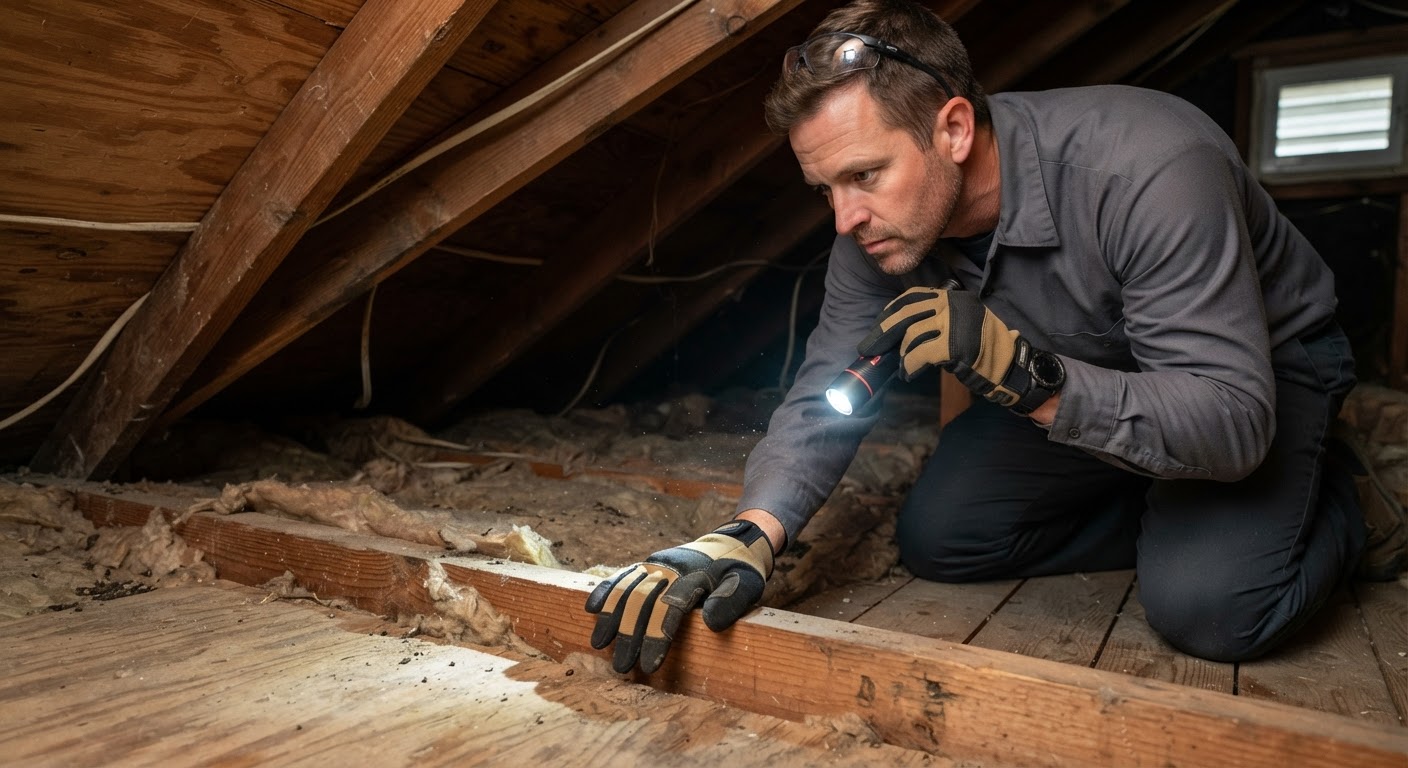
Attics are classic harborage sites for brown recluses. The dry heat of a Tennessee summer does not deter them; in fact, recluses are remarkably resilient to heat and drought. Unfinished insulation, exposed framing, and stored items offer hundreds of narrow voids where spiders can rest, mate, and deposit egg sacs unnoticed.
Cardboard Boxes and Storage Areas
Cardboard is one of the most attractive materials for a brown recluse. The corrugated layers create ideal crevices that mimic the natural tree bark and rock piles recluses inhabit outdoors. Closets, garages, and utility rooms filled with cardboard boxes left untouched for months can easily house developing populations.
Behind Baseboards and Wall Voids
Recluses frequently navigate through the structural voids of a home. They slip beneath baseboards, behind switch plates, into dropped ceilings, and around plumbing penetrations. Because they build disorganized, retreat-style webs rather than large geometric capture webs, their presence often goes undetected until an individual emerges at night to hunt.
Understanding the Risks of Brown Recluse Bites
Despite their venomous reputation, brown recluses are not aggressive. They lack the aggressive instincts found in some other venomous creatures and do not hunt humans. The vast majority of bites occur as an accidental defensive reaction—typically when a spider is trapped against human skin inside clothing, work gloves, footwear, or bed linens.
Symptoms of a Bite
A brown recluse bite is often painless initially, or it may feel like a minor pinprick. Noticeable symptoms generally develop over the subsequent two to eight hours:
- Redness, swelling, and localized burning or stinging pain.
- The formation of a small blister or pale zone surrounded by an irregular red ring (often called a "bullseye" appearance).
- In a minority of cases, the venom causes localized tissue breakdown (necrosis), leading to an open ulcer that can take weeks to heal and may leave a scar.
- Systemic reactions, while rare, can include fever, chills, body aches, and nausea, and require immediate medical evaluation.
If you suspect you have been bitten by a brown recluse, wash the area thoroughly with soap and water, apply a cold compress to reduce inflammation, keep the affected limb elevated if possible, and consult a medical professional promptly. If it can be done safely, capturing the spider in a secure container assists healthcare providers in confirming the diagnosis.
Why DIY Treatments Often Fail
When homeowners realize they have brown recluses, an instinctual reaction is often to purchase over-the-counter aerosol "bug bombs" or foggers. In the case of brown recluses, this approach frequently makes the problem worse rather than better.
Aerosol foggers release a fine mist that settles on open surfaces but fails to penetrate deep into the structural cracks, insulation, and wall voids where recluses spend their time. The irritating chemical residues can agitate the spiders, causing them to abandon their deep harborages and wander openly into bedrooms, hallways, and living spaces, substantially increasing the risk of accidental human contact.
Furthermore, spiders have a different physiology than crawling insects. Because they stand high on their slender legs, their bodies rarely contact treated surfaces directly, and they do not groom their feet in the way cockroaches or flies do. Standard surface sprays alone rarely deliver an adequate lethal dose.
Safe, Practical Steps for Homeowners
Managing brown recluses requires a combination of habitat modification, physical exclusion, and professional intervention. Homeowners can take several practical steps immediately to lower encounter rates:
- Transition to Plastic Storage: Replace cardboard boxes in closets, attics, and garages with sealable plastic storage totes. This eliminates harboring crevices and keeps spiders out of stored belongings.
- Shake Out Stored Items: Make it a habit to shake out shoes, coats, boots, and blankets that have been stored for extended periods before putting them on.
- Keep Beds Away from Walls: Move bed frames a few inches away from walls and remove bed skirts or hanging dust ruffles that touch the floor, eliminating easy climbing routes for wandering spiders.
- Reduce Clutter: Clear floor clutter in closets, utility rooms, and basements. Reducing the number of quiet hiding spots forces spiders into fewer areas and makes inspections easier.
- Deploy Sticky Monitors: Place flat, glue-based insect traps along baseboards, behind furniture, and in corners. These monitors trap roaming spiders and serve as an early-warning system to gauge population activity.
- Seal Exterior Gaps: Inspect windows, foundation vents, door sweeps, and pipe penetrations. Installing tight-fitting weatherstripping and sealing gaps limits spider entry from outdoors.
Professional Management for Lasting Relief
Because brown recluses reproduce quietly and reside deep within building architecture, substantial infestations require a structured pest management strategy. Successful control relies on inspecting hidden harborages, utilizing targeted residual products within wall cavities and attics, and establishing a persistent barrier that eliminates both the spiders and the insect populations they rely on for food.
If you have spotted brown recluses in your home or want an expert assessment of your storage and attic spaces, North Ember Pest Control provides thorough residential pest management across Memphis. Our team identifies harborage areas and applies safe, targeted treatments to protect your home and give your family peace of mind.
Need help from North Ember Pest Control?
Contact our team to discuss your service needs in Memphis and surrounding service areas.